20–25%
added fuel from 0.5 mm of slime over half a hull
IMO GloFouling Partnerships
Autonomous marine robotics
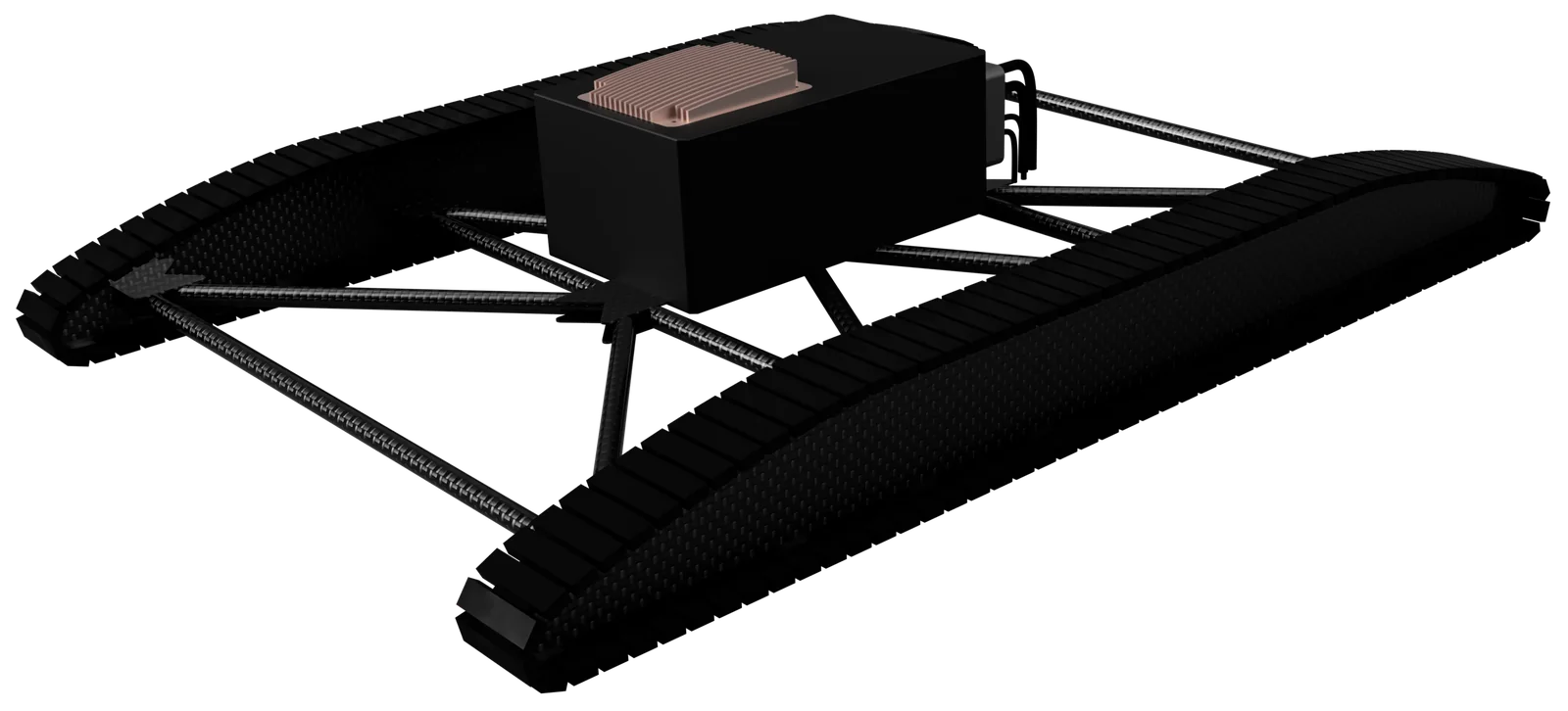
Abyss is building one autonomy core and task-specific robots around it: an inspection unit that maps biofouling across a ship's hull, and a cleaning unit designed to groom it away while the ship is under way.
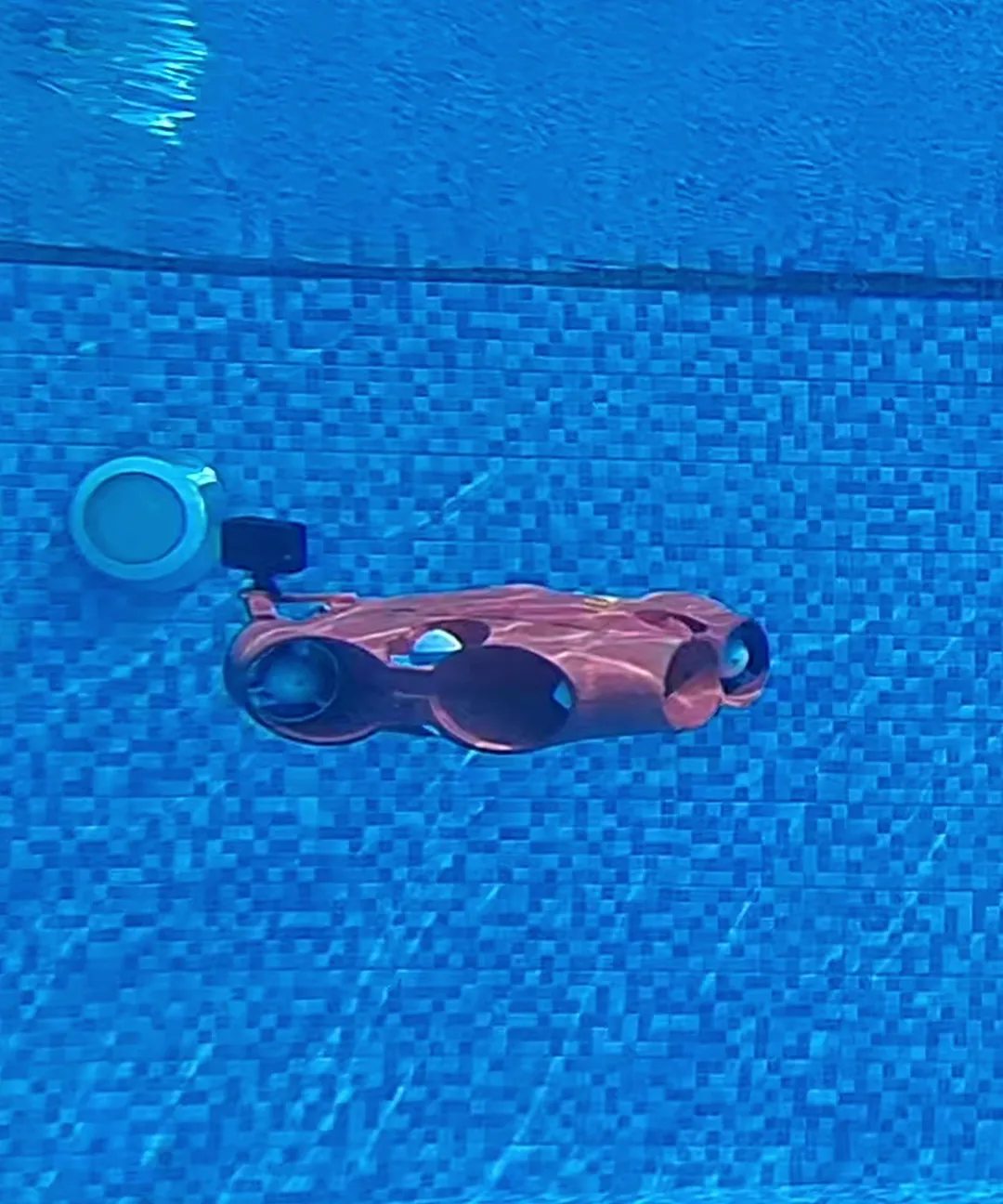
Demonstrated · pool trialReal footage. The surface is reconstructed from the vehicle's own camera as it swims.
01 The operating problem
20–25%
added fuel from 0.5 mm of slime over half a hull
IMO GloFouling Partnerships
$1.2M
per vessel, per year: a 5% penalty on one Capesize bulker
One Capesize bulker on 70-day China–Brazil–China round voyages, 4.2 a year at ~294 sea days (IMarEST, 2025). Carbon priced at market allowance rates.
±5% contract tolerance. BIMCO speed-and-consumption clauses absorb the loss. It cannot be claimed.
Split incentive. Owners maintain the hull. Charterers buy the fuel.
Added fuel consumption over two years in service. Drag across the chart to compare.
Month 0
Reactive 0%
Grooming 0%
Each reactive cycle starts higher because abrasive cleaning strips coating. Peak values anchored to IMO GloFouling: 0.5 mm of slime over half a hull costs 20–25% in fuel.
Every ship above 5,000 GT graded A to E each year. The grade feeds charter rates and asset value.
A well-to-wake carbon-intensity cap, tightening to 2050, with financial penalties.
Port authorities assess in-water cleaning requests on hull condition, cleaning method and environmental risk.
Carbon permits rising to 100% in 2027, with allowances near $90 a tonne. This one arrives as an invoice.
The requirement isn't a better clean. It's frequent, low-intensity hull care that doesn't need the ship to stop.
02 How it works
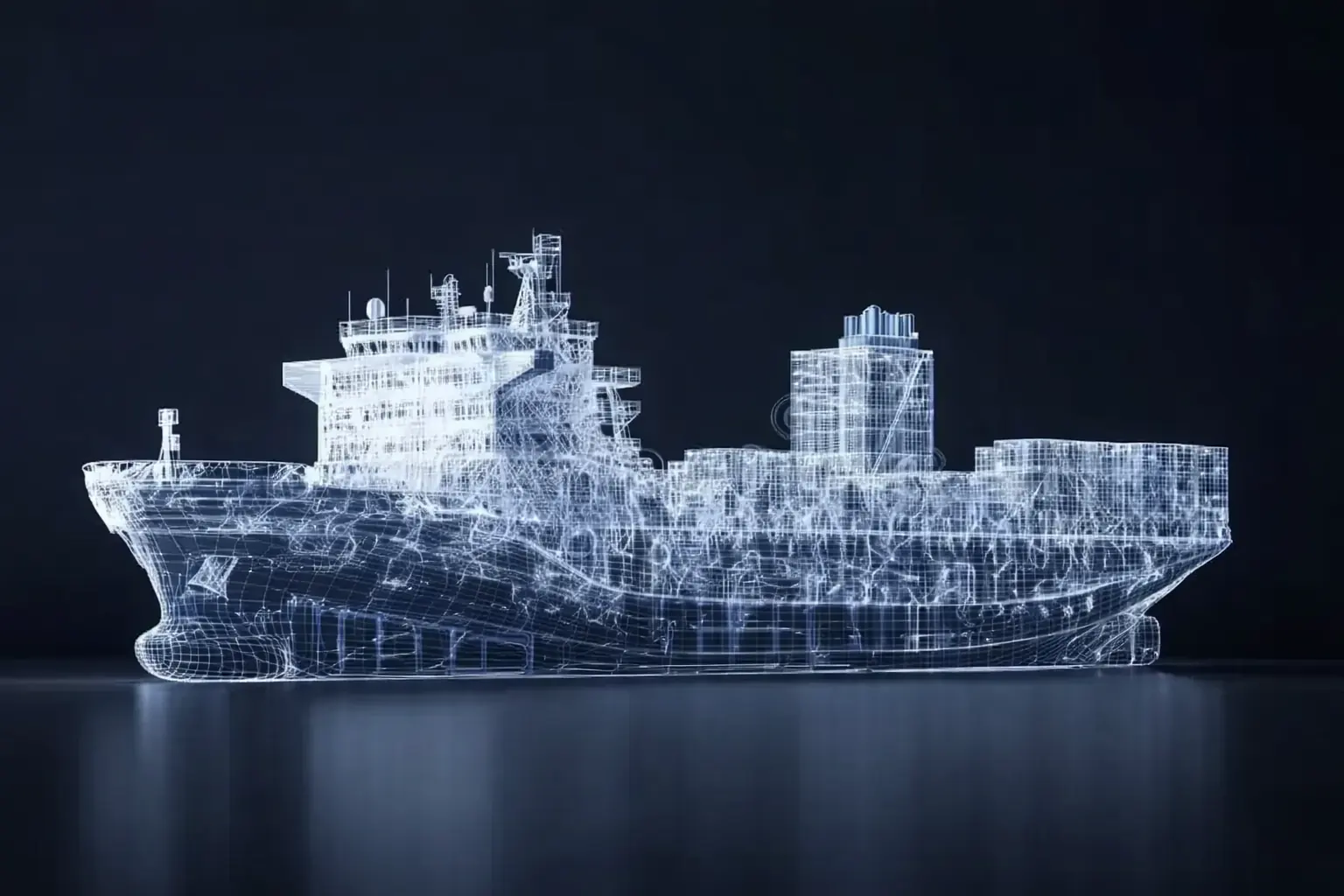
A simulation of the Abyss workflow, built on our own CAD models of the hull and both robots. Step through it, or drag to look around. Hover the hull to read the map.
Cleaning units
Relative time from the simulated lane plan. Fleet coordination is in design.
—
Loading hull model 0%
Your browser couldn't start the 3D simulation. Here is the same workflow as illustrations.
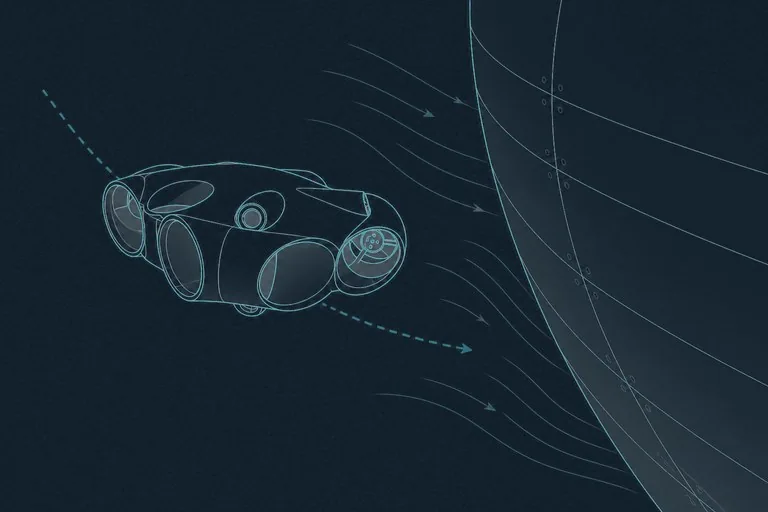
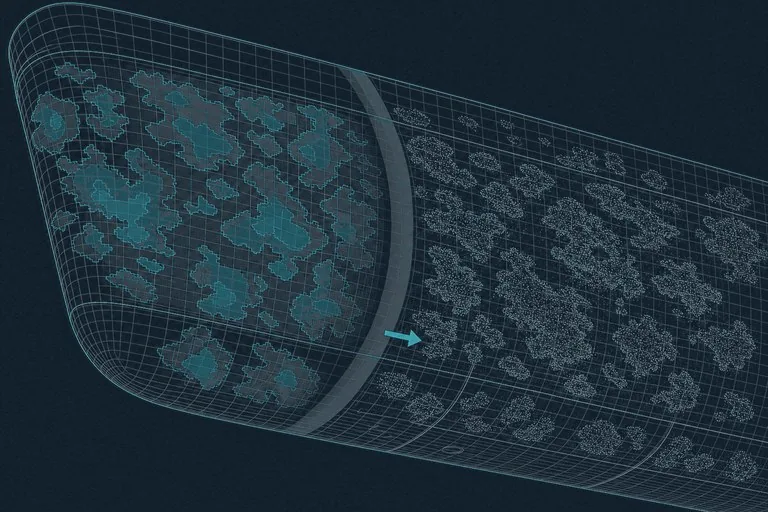
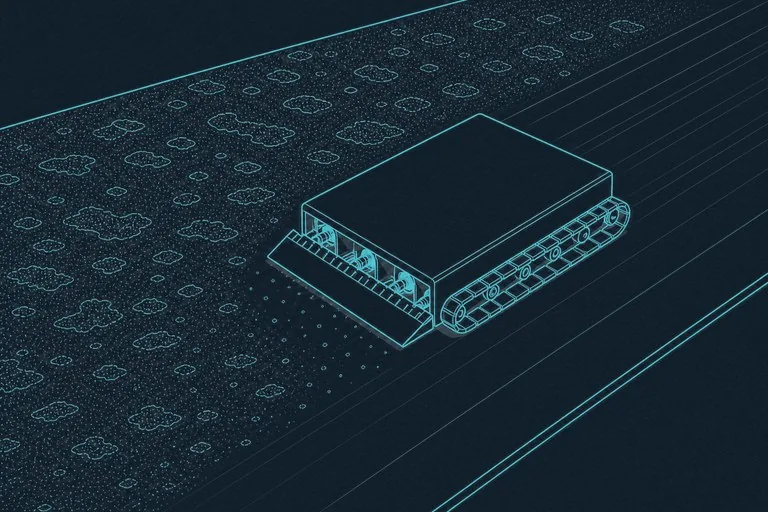
Illustrative simulation. Fouling values are synthetic and motion is time-lapsed. The robots are Abyss CAD models, drawn several times larger than true scale relative to the hull so they stay visible; lanes are planned on the flat side of the midbody only.
03 The evidence
The first-generation inspection vehicle is built and tested in pool trials. It swims free, images the surface it passes, and reconstructs that surface from its own camera.
The reconstructed surface grows as the vehicle advances. Overlaid on external footage of the trial.
Onboard camera, pool trial.
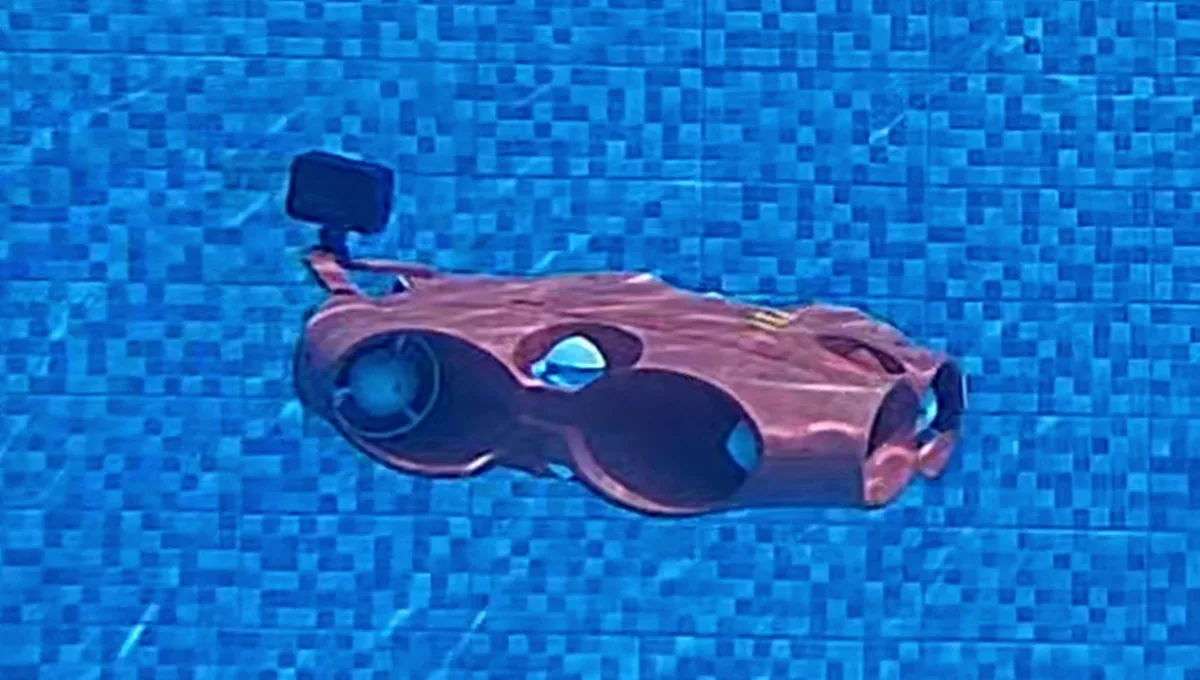 Mounted camera
Ducted thrusters
Hull body · 1st gen
Mounted camera
Ducted thrusters
Hull body · 1st gen
The Q4 2026 programme is a redesign of this tested vehicle and its core. It isn't a blank sheet.
A pool wall, not a ship hull. Nothing shown here has yet been validated on a ship hull or in open water.
04 The platform
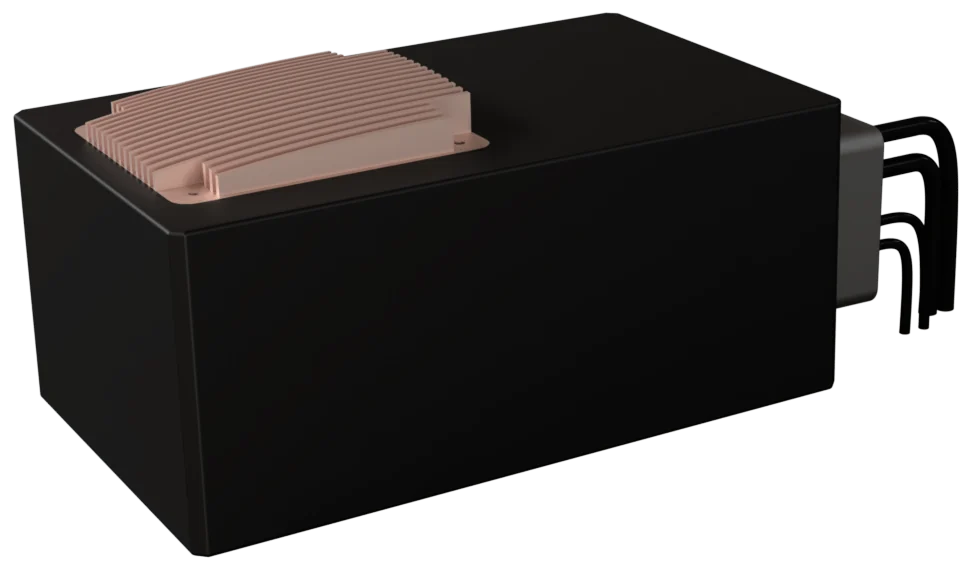
The autonomy, navigation and power stack lives in one sealed core. Per body, only the hydrodynamic shell, the locomotion and the tool change, so the autonomy stack carries over to every future body.
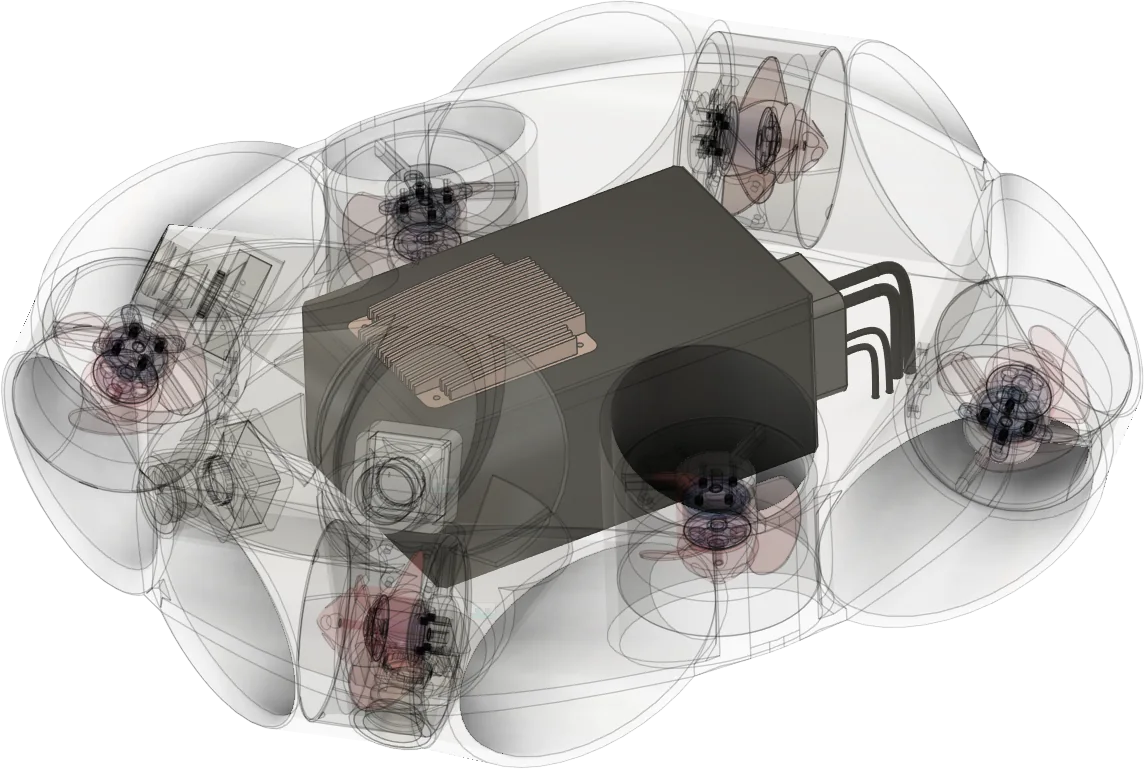
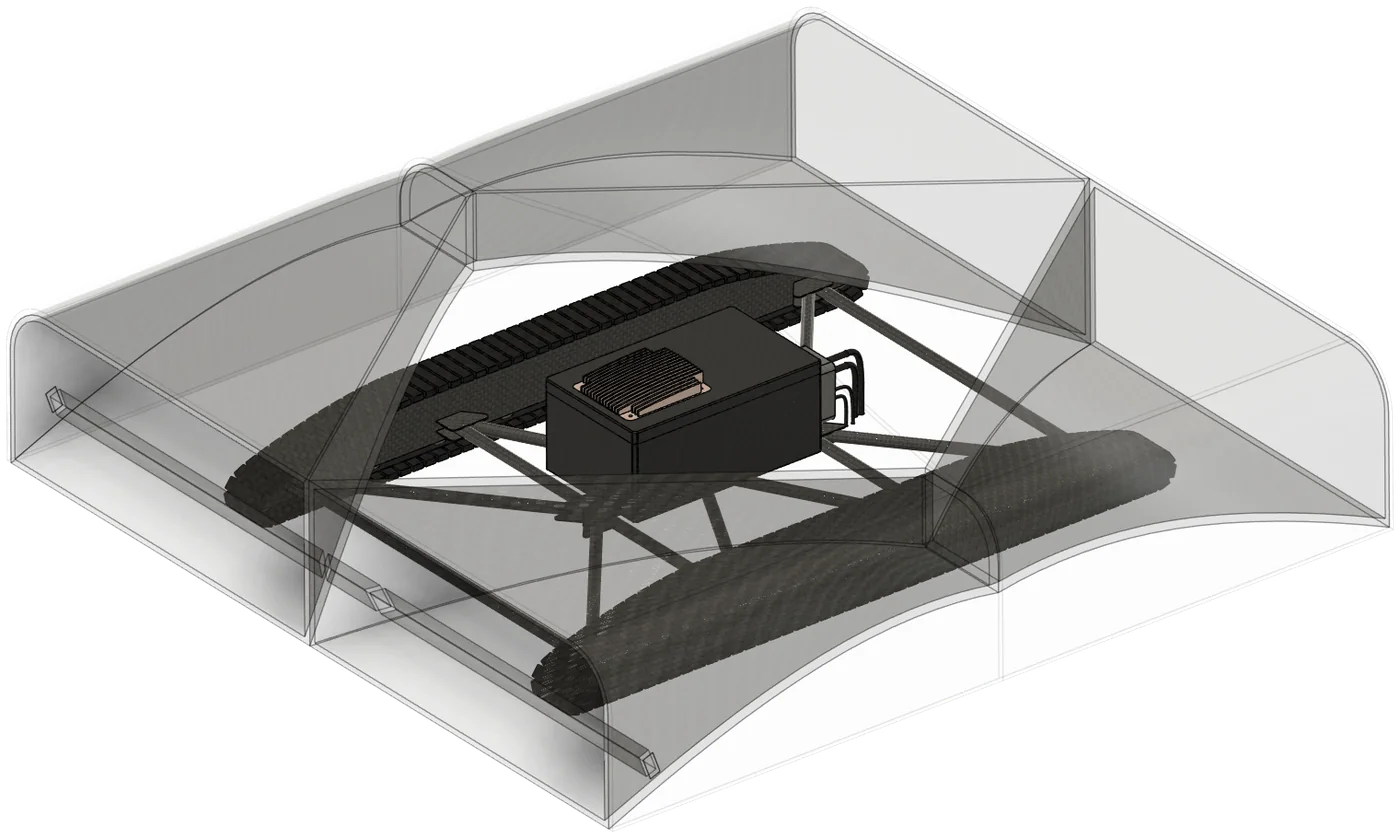
Shared across bodies
This body adds
04.1 Inside the core
Thermal path from the electronics to the surrounding water
Control electronics and battery management
Onboard compute for the autonomy stack
Onboard power, carried with the core
Task-specific sensors attach to the core
Primary power and signal interface to the vehicle body
Demonstrated in pool trials · driving the inspection unit
Scroll to open the core
05 The cleaning unit
Adhesion In development
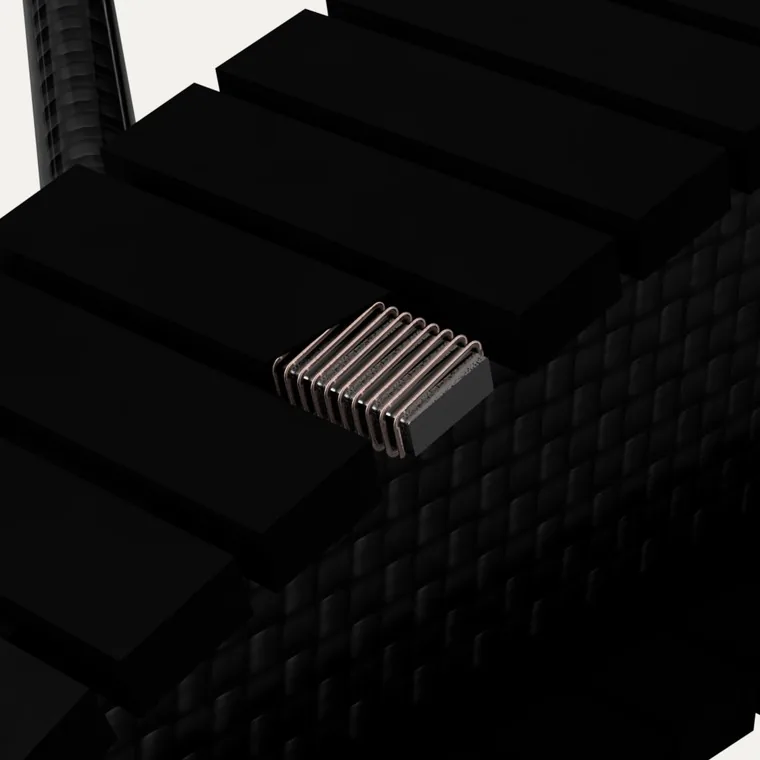
Electro-permanent magnets in the track's leading section are the unit's primary attachment to the steel hull. A short current pulse switches a magnet on or off, and it then holds its state with no continuous current. This hold doesn't depend on flow, so it works at the dock as well as under way.
up to 95% lower power consumption than traditional electromagnets
Based on simulation, consistent with published EPM data (MAGBAT-Europe).
Hold-down In design
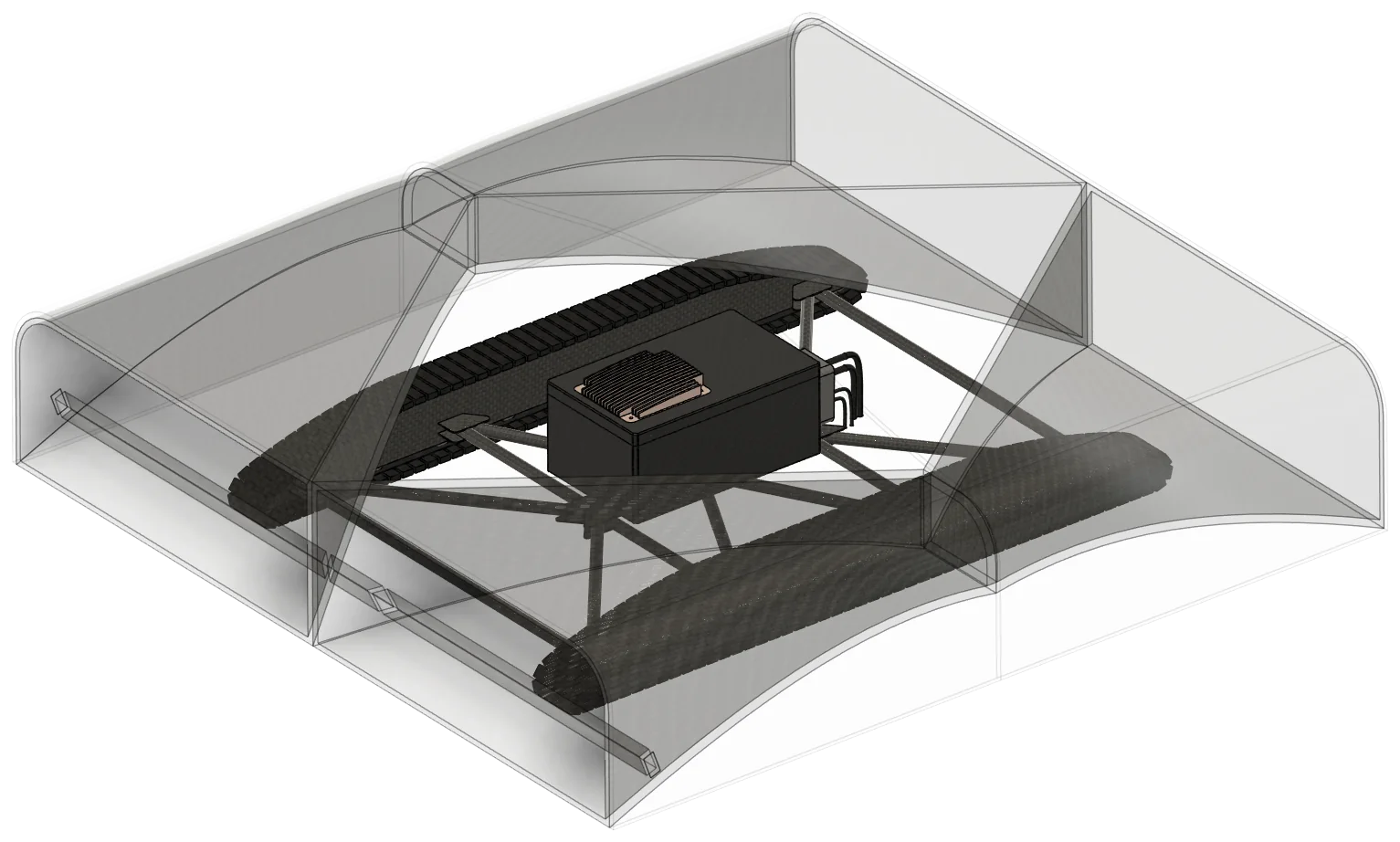
Twin venturi tunnels add scalable downforce on top of the EPM grip once the ship is under way. Water speeds up where the tunnel narrows and its pressure drops, pressing the unit onto the hull passively, with no pump.
ΔP ∝ ½ρv² This additional hold-down scales with the square of vessel speed, growing in transit on top of the EPM attachment that holds the unit on at any speed.
The tool In design
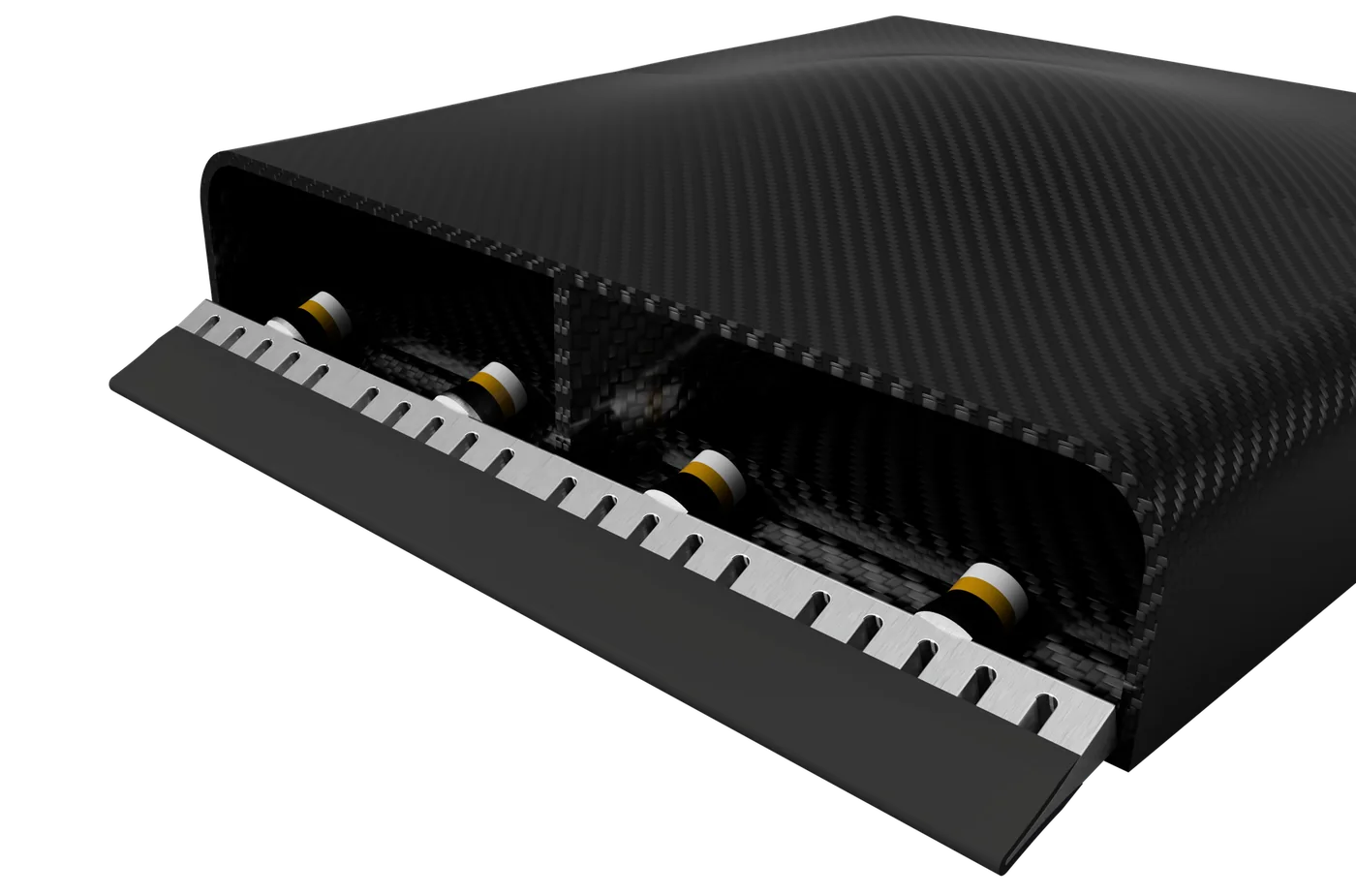
A polymer scraper oscillates at ultrasonic frequency across the mouths of the venturi tunnels. A polymer blade rather than brushes, designed to remove fouling and bacterial slime while leaving the coating intact.
Run frequently at low intensity, it is designed to keep the hull near its low-fouling state, removing biofilm before macrofouling establishes.
06 Autonomy
No GNSS
Position has to be estimated onboard, relative to the hull.
Visibility
Perception has to work at short range, close to the surface.
Surface
The robot needs a model of the hull to know what it has covered.
Flow
Motion control has to reject disturbance continuously.
Contact
Tool action has to remove biofilm without stripping coating.
The same five problems come up on every body, every time. So the core is built to answer all five, and it carries over unchanged to whatever body it's in.
No GNSSState estimation
Tracks the vehicle's pose relative to the hull, not the globe.
VisibilityPerception
Reads the hull from the vehicle's own short-range imagery.
SurfaceHull model
Remembers the surface, so the robot knows what it has covered.
FlowMotion control
Rejects disturbance continuously, even while under way.
ContactCoverage planning
Aims the body's tool at exactly the fouled area.
Every body carries a different shell, locomotion and tool. The autonomy that answers these five problems is the same core module, every time.
07 Roadmap
Now
Q4 2026
H1 2027
H2 2027
Beyond
37,421
vessels above 5,000 GT: 133,743 robot setups across that fleet
$6.83B/yr
total addressable market, of which $4.01B a year is replacement
13,500
serviceable vessels: bulk, tanker and container under 25 years, with fuel and hull on one P&L
Abyss estimate. Fleet: Equasis World Fleet 2022. Fleet growth: UNCTAD Review of Maritime Transport 2025. Setups priced at $60/m² of wetted surface.
08 Work with us
We are looking for vessel access for 2027 hull trials. A pilot produces measured removal, endurance and hull-condition data on your own vessel, and we can walk your engineering team through the architecture in depth.